
Have you seen the guy who spends two million dollars a year just to stay young?
If you follow tech news, you probably know Bryan Johnson. He is the tech centimillionaire who made headlines with Project Blueprint. He eats dinner at 11 AM, takes over 100 supplements daily, and monitors his nighttime erections to measure his biological age.
It sounds extreme. Some people even call it a cult. But whether you love him or think he is crazy, Johnson is just the face of a much bigger movement.
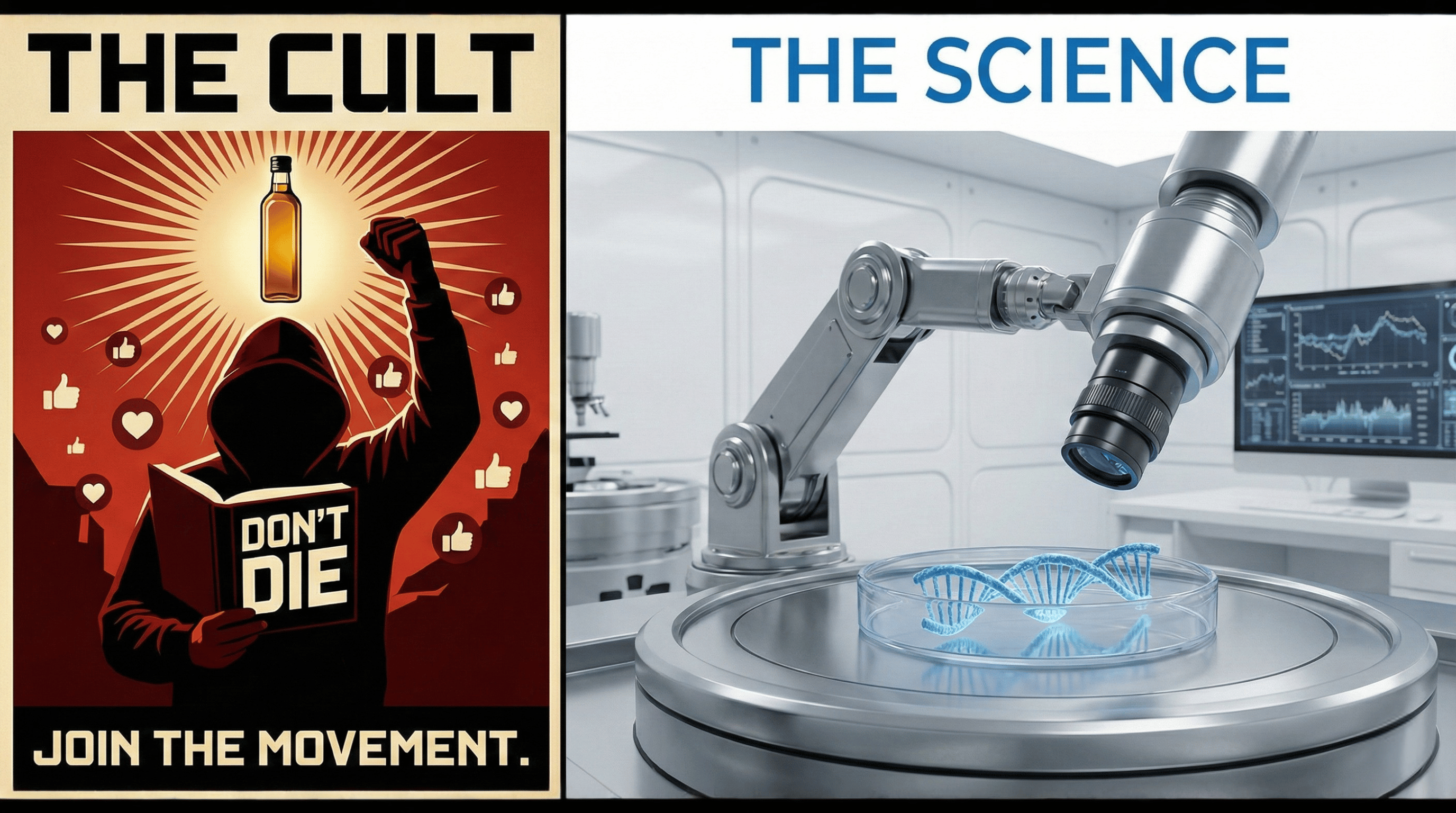
While his “Don’t Die” philosophy grabs all the attention on social media, the real money is flowing somewhere else. Let’s dive into the current biohacking trends and see where the actual business of immortality is heading.
The Pivot from Startup to Philosophy
Bryan Johnson recently shifted gears. He moved from positioning Blueprint as a strict data-driven startup to a broader cultural movement he calls “Don’t Die.”
It is fascinating to watch. He is trying to gamify health. He wants you to think of your body not as a temple, but as an engineering problem that needs solving. This approach has made biohacking trends go viral. Suddenly, everyone is talking about sleep scores, olive oil, and red light therapy.
But here is the catch.
Drinking premium olive oil and taping your mouth shut at night is the “soft” side of biohacking. It is consumer-friendly and easy to sell on Instagram. However, that is not where the smartest investors are putting their money.
Hard Science vs. The Hype
If you look past the viral stunts, the longevity economy is becoming a massive industry. But the big players are not investing in diet plans. They are investing in biology.
The most significant biohacking trends today are happening in labs, not in kitchens. Investors are pouring billions into “hard science” startups. These are companies focusing on cellular biotechnology and gene therapy.
For example, there is a huge focus on cellular rejuvenation. This involves clearing out “zombie cells” (senescent cells) that stop dividing but refuse to die, causing inflammation and aging in the body. You can read more about how this science works on Nature’s detailed report on aging.
This is where the real potential lies. While Bryan Johnson is optimizing his current body, these startups are trying to rewrite the code of human biology itself.
What This Means for You
You might be thinking that this sounds like science fiction. Or maybe something only billionaires can afford.
That is partially true right now. But the goal of the longevity economy is eventually to make these treatments accessible. The current biohacking trends act as a bridge. They make us more aware of our health data while the hard science catches up.
You don’t need to spend millions like Johnson to benefit from this shift. The market is flooding with better wearable tech and more accessible health tracking apps. This is the democratization of health.
If you are interested in how technology is changing the way we live and work, you should check out the latest updates on Uzone.id’s startup section to stay ahead of the curve.
The Point is..
The “Don’t Die” movement might look like a spectacle, but it signals a massive shift in how we view aging.
We are moving from a world where we treat sickness to a world where we optimize health. The viral biohacking trends you see online are just the tip of the iceberg. The real revolution is happening in the petri dishes of biotech startups backed by serious venture capital.
So, you don’t need to eat dinner at 11 AM to be part of the future. You just need to pay attention to the science, not just the influencers.

