
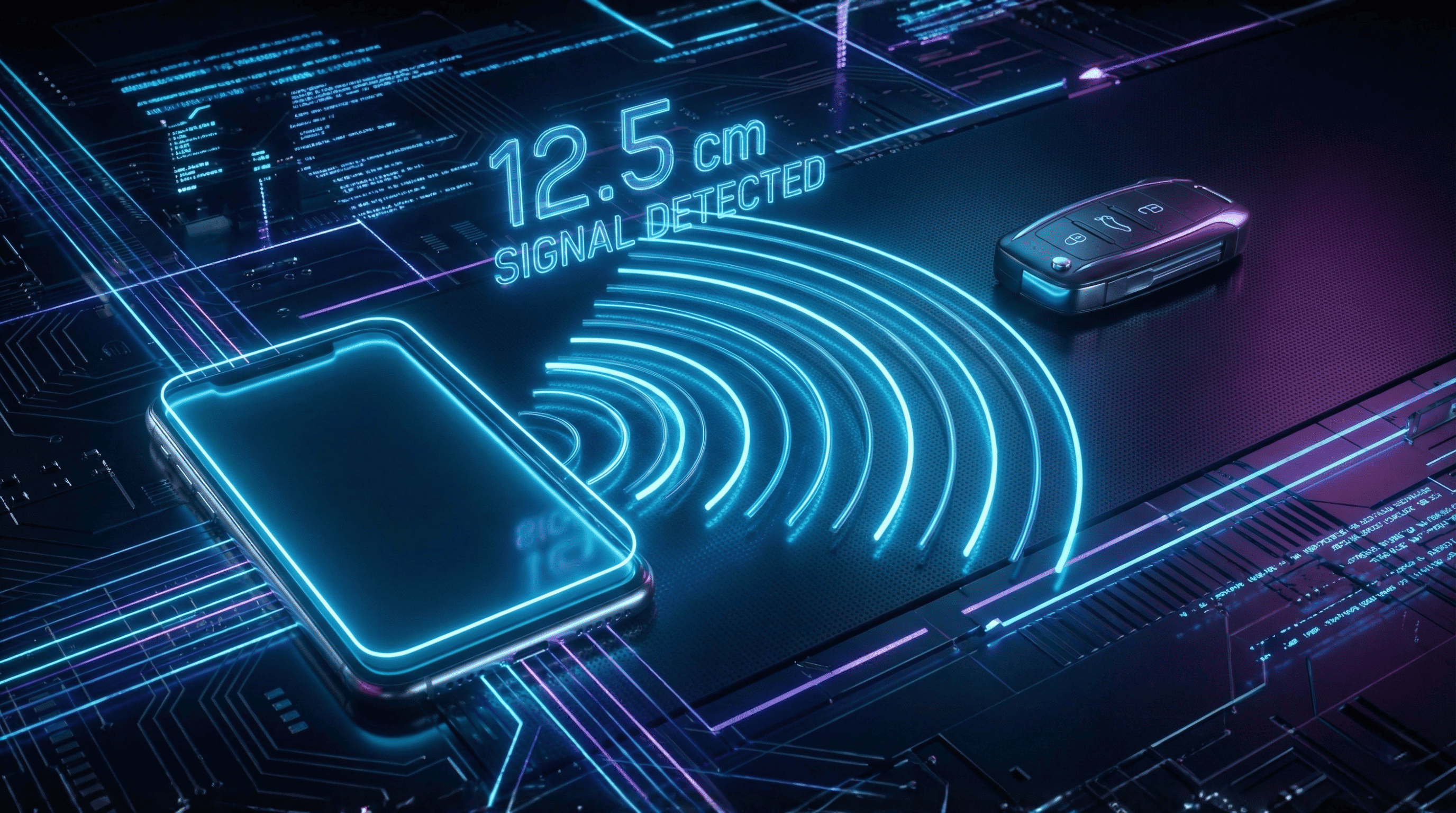
Imagine waking up in the morning, grabbing your coffee, and walking out the front door only to find your driveway empty. Your car is gone. There is no shattered glass, no sign of forced entry, and your car keys are sitting safely on the kitchen counter where you left them.
This scenario is becoming increasingly common due to a hacking method known as a “Relay Attack.” Thieves use cheap devices to amplify the signal from your key fob inside the house, tricking your car outside into thinking you are standing right next to it. It takes less than 60 seconds to steal a luxury vehicle this way.
For years, the auto industry and tech companies have been playing a game of cat and mouse with these high-tech criminals. However, the game is about to change forever. The Bluetooth Special Interest Group (SIG) has officially released the specifications for Bluetooth 6.0, and it comes with a revolutionary feature called “Channel Sounding.”
This isn’t just a minor update for better headphones. This is a security overhaul that promises to prevent keyless car theft and transform Bluetooth from a simple connectivity tool into a high-precision radar. Let’s dive into how this technology works and why it spells the end for relay attacks.
The Problem with Current Keyless Systems
To understand why Bluetooth 6.0 is such a big deal, you first need to understand the flaw in the current technology. Most keyless entry systems rely on signal strength, known as RSSI (Received Signal Strength Indicator), to estimate distance.
The logic is simple: if the signal is strong, the key must be close. If the signal is weak, the key is far away.
Thieves exploit this logic using signal boosters. They stand near your front door, capture the weak signal from your key, amplify it to make it “loud,” and beam it to the car. The car detects a strong signal and unlocks, thinking the owner is present.
This is where the current technology fails. It cannot distinguish between a genuinely close signal and an artificially amplified one.
Enter Bluetooth 6.0: What is Channel Sounding?
The headline of the new Bluetooth 6.0 features is undoubtedly Channel Sounding. This technology fundamentally changes how devices measure distance. Instead of just guessing distance based on how “loud” the signal is, Channel Sounding measures the “time” and “phase” of the signal.
According to the official release by the Bluetooth SIG, this new standard introduces true distance awareness. It uses a method called Phase-Based Ranging (PBR) combined with Round-Trip Time (RTT).
Here is the non-technical explanation: Your car will send a complex signal to your key, and the key will send it back. Bluetooth 6.0 measures exactly how long that round trip took at the speed of light. Because thieves cannot change the laws of physics or make a signal travel faster than light, they cannot fake this measurement.
How It Stops the Thieves
This is the game-changer for vehicle security. With Bluetooth 6.0, even if a thief amplifies the signal to be incredibly strong, the “time” it takes for the signal to travel will reveal the truth.
The car’s computer will analyze the data: “The signal is strong, but the time delay shows the key is actually 50 feet away inside the house.”
Result? The car remains locked and immobilized. Channel Sounding provides centimeter-level accuracy. It creates a secure geofence around your vehicle that is virtually impossible to spoof with current relay attack methods. This is the solution automakers have been waiting for to prevent keyless car theft effectively without forcing owners to wrap their keys in tin foil.
Beyond Security: The “Find My” Revolution
While stopping car theft is the most critical application, the precision of Bluetooth 6.0 will also revolutionize how you find lost items.
Current Bluetooth trackers (like older AirTags or Tiles) can tell you if an item is “nearby,” but they often struggle to pinpoint the exact location, especially indoors. You might know your wallet is in the living room, but not whether it is under the sofa or behind the TV.
With the new Bluetooth 6.0 features, tracking becomes a radar-like experience. You will not just see “connected”; you will see “1.5 meters to your left.” This brings Ultra-Wideband (UWB) levels of precision to the much more common and affordable Bluetooth standard.
This opens up possibilities for indoor navigation, digital keys for secure office entry, and even industrial tracking where precision is mandatory. You can read more about the implications of precise location standards from organizations like the IEEE Standards Association.
When Can You Get It?
The specification is out, but hardware takes time. We can expect to see the first smartphones, digital keys, and vehicles supporting Bluetooth 6.0 starting in late 2025 or early 2026.
For now, the release of Bluetooth 6.0 marks a significant milestone. It is the moment Bluetooth graduated from being a cable replacement to becoming a secure, spatial awareness technology. For car owners tired of worrying about relay attacks, this update cannot come soon enough.To stay updated on the latest gadget news and security tech developments, make sure to follow the Technology and Gadget channel on Uzone.id. The future is wireless, and finally, it is secure.

